Emergency Dentist Bakersfield CA for Lost Fillings and Crowns
A lost filling or a crown that slips off rarely happens at a convenient time. It often shows up during dinner, while flossing, on a weekend, or just before an important meeting. One minute the tooth feels normal enough, and the next it is sharp, hollow, sensitive, or painful when air hits it. For many people, the first question is simple: is this a true dental emergency, or can it wait?
In practice, the answer depends on what came off, how much natural tooth structure remains, and what symptoms followed. A lost filling can expose dentin and leave a tooth vulnerable to temperature sensitivity, pressure pain, trapped food, and fracture. A crown that comes loose may leave a heavily restored tooth without protection, which matters because crowned teeth are often already weakened by large fillings, cracks, or root canal treatment. That is why patients searching for an Emergency Dentist Bakersfield CA are often dealing with more than inconvenience. They are trying to prevent a small repair from turning into a larger, more expensive one.
The good news is that many of these situations can be stabilized quickly when handled early. The less good news is that home fixes only buy time. They do not replace proper dental care, and in some cases they can make the final repair harder if the wrong material is used or the tooth continues to absorb stress.
Why fillings and crowns come off in the first place
Most fillings and crowns do not fail out of nowhere. Usually there has been a slow process in the background. With fillings, the surrounding tooth can weaken over time, especially if the original cavity was large. Tiny gaps can form at the margins. Chewing forces, clenching, grinding, sticky foods, and changes in temperature all work against the seal. Eventually, a filling may loosen or a piece of the tooth around it may fracture.
Crowns fail for similar reasons, although the mechanics are a little different. The cement holding the crown can break down. Recurrent decay can form underneath. The crown itself may be intact, but the underlying tooth may not be. A crown can also come off if the bite is uneven and one area absorbs too much force. I have seen crowns dislodge on caramel, crusty bread, and even from patients pulling floss upward instead of sliding it out to the side. The food gets blamed, but the real issue is usually that the restoration was already compromised.
Age matters, but not in the way people think. A crown that lasted ten or fifteen years did not necessarily fail because it was poorly done. Restorations live under constant load. Saliva, acids, pressure, and habits like grinding slowly wear down cements and interfaces. A restoration that has served for a decade may simply have reached the point where maintenance or replacement is reasonable.
When it is urgent and when it can wait a day
Not every lost filling or crown needs treatment within the hour, but many should be evaluated the same day or within the next day or two. The urgency rises fast when pain is significant, swelling develops, bleeding continues, or the tooth is broken down enough that you can see sharp edges or dark internal structure.
If you are wondering whether to call an Emergency Dentist Bakersfield CA immediately, these situations deserve prompt attention:
- strong pain that does not settle, especially if it throbs or wakes you at night
- visible swelling of the gum, face, or jaw
- a crown or filling came off and the remaining tooth looks cracked, sharp, or severely broken
- you cannot bite without a jolt of pain
- the area has a bad taste, pus, or signs of infection
On the other hand, some cases are uncomfortable but stable. A crown that came off cleanly, with minimal sensitivity and no obvious fracture, can sometimes be temporarily re-seated after the dentist evaluates the situation by phone and gives instructions. A small filling that fell out may be manageable for a short time if the tooth is not very sensitive and the area can be kept clean. Even then, delay is risky. Exposed dentin can become more painful quickly, and an unprotected tooth is easier to crack than most people realize.
What a lost filling actually exposes
Patients often assume a filling sits on the tooth like a cap on a bottle. It is more integrated than that, but once it comes out, the remaining space can act like a trap for food and bacteria. Depending on the depth of the cavity, the exposed area may be close to the nerve. That is why cold water suddenly hurts, why sweet foods can sting, or why breathing through your mouth feels unpleasant.
If the missing filling was small and shallow, replacement is often straightforward. If the area is large, however, the dentist may find that the tooth walls are too https://wakelet.com/@smyledental thin for another direct filling. In those cases, an onlay or crown may be the better long-term answer because it redistributes force and protects what is left. This is one of the most common disappointments patients experience. They come in expecting a simple refill and learn that the tooth now needs more support than it did years ago. It is not upselling. It is structural judgment.
There is also a difference between a filling that popped out cleanly and one that took part of the tooth with it. When patients bring in the piece they found, it may look like a filling, but under magnification there is sometimes natural tooth attached to it. That changes the plan because now the issue is not just retention. It is fracture.
What to do at home before you can be seen
The goal at home is to protect the tooth, manage discomfort, and avoid causing further damage. Do not test the tooth over and over. People often tap it, bite on it, or look at it with a metal tool. None of that helps.
A practical short-term approach usually looks like this:
- rinse gently with warm water to clear debris
- keep the area as clean as possible, using a soft toothbrush and careful flossing around the site
- avoid chewing on that side, especially hard, sticky, or crunchy foods
- if a crown came off, store it safely and bring it to the appointment
- use an over-the-counter pain reliever if you normally tolerate it and your physician has not told you to avoid it
A few cautions matter here. Superglue has no place in the mouth. It can irritate soft tissue, create a brittle bond in the wrong position, and complicate proper re-cementation. Temporary dental cement sold at pharmacies can sometimes help in very specific situations, especially with a crown that came off intact, but it is still a short-term measure and should not be packed aggressively into a deep space without guidance. If a tooth is very sensitive, placing random material into it can trigger more pain rather than less.
If the tooth has a sharp edge cutting your tongue or cheek, dental wax can be useful. Sugar-free gum can sometimes cover an edge in a pinch, though it is not ideal for long periods. These are comfort measures, not repairs.
If a crown fell off, save it
A crown that comes off is not automatically ruined. In many cases, if the crown is undamaged and the tooth underneath is sound, it can be cleaned and re-cemented. That is one reason dentists usually want patients to bring the crown with them rather than assume a new one is needed.
Still, re-cementing is only appropriate when the fit remains accurate. If decay has formed under the crown, if the tooth fractured, or if the crown margin is distorted, simply gluing it back is not good dentistry. The crown may seat incompletely, trap bacteria, alter the bite, or come back off within days. I have seen patients try to push a crown back into place at home after eating, only to discover later that a grain of food or a small clot kept it from seating fully. The crown felt "good enough" to them, but the tooth was under constant abnormal pressure.
When a crown falls off a front tooth, the concern is often appearance first and pain second. That is understandable. In those cases, same-day evaluation can be especially helpful because even if permanent treatment is not completed immediately, there may be a way to place a temporary solution that protects the tooth and restores appearance.
Molars are different. When a back crown comes off, the tooth may still look serviceable, but those teeth carry heavy chewing loads. If the exposed tooth had a root canal, it may not ache much, yet it can still fracture catastrophically if left unprotected. Lack of pain should not be mistaken for lack of risk.
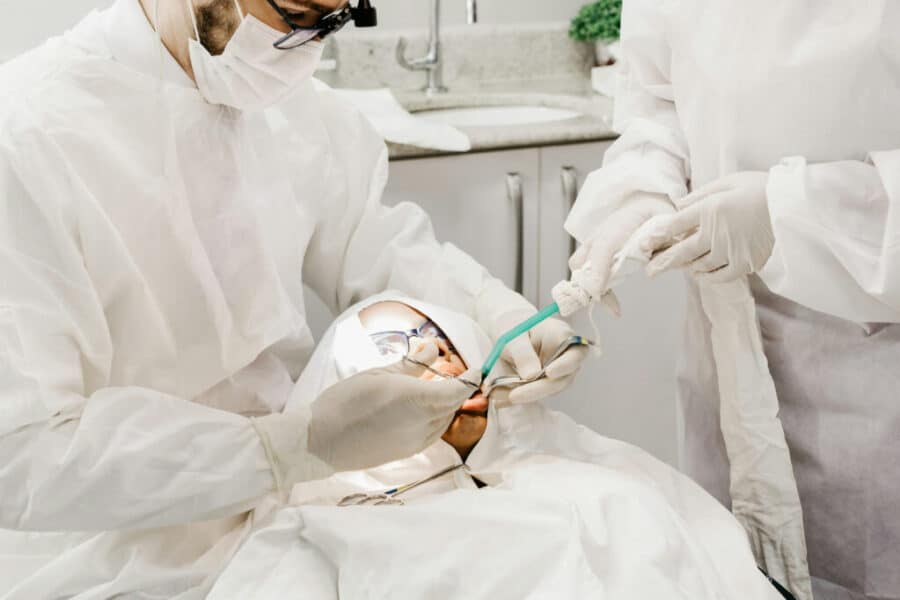
What happens during an emergency dental visit
A proper emergency visit for a lost filling or crown is usually efficient, but it is still diagnostic. The dentist is not just trying to put something back. The dentist is trying to determine why it failed and whether the tooth is still restorable.
Expect a visual exam, questions about how and when the restoration came off, and often an X-ray. That image helps reveal decay beneath the old restoration, cracks extending toward the root, recurrent infection, or remaining tooth structure that cannot be seen from the surface. If the nerve is irritated, cold testing or bite testing may be done to judge whether the tooth can recover with a new restoration or whether root canal treatment may be needed.
From there, treatment often falls into one of several paths. A simple lost filling may be replaced the same day. A crown that came off intact may be re-cemented after cleaning and checking the fit. A damaged crown may require a new impression or digital scan and a temporary crown. If the tooth is deeply compromised, the visit may focus first on pain control, protecting the tooth, and planning the next step rather than finishing everything at once.
This is where experience matters. The fastest solution is not always the wisest one. A tooth with a large missing filling and thin cusps may accept another filling today, but if those cusps are already flexing, the repair may fail soon. Sometimes the better emergency treatment is stabilization and clear planning, not a rushed permanent restoration that does not respect the remaining structure.
Temporary fixes versus durable treatment
Patients often ask whether a simple refill or re-cementation is "good enough." Sometimes yes. Sometimes absolutely not. The distinction comes down to biology and mechanics.
If the tooth is healthy, the margins are clean, and the restoration was lost because of isolated cement failure or wear, a conservative fix can work very well. But if the tooth has recurrent decay, cracks, heavy bite stress, or little remaining enamel for bonding, conservative treatment may only postpone a larger failure.
This is why two teeth with the same symptom can receive different recommendations. One patient loses a crown and leaves with it re-cemented. Another loses a crown and learns the tooth needs a buildup and a new crown. A third learns the fracture extends too far below the gumline and the tooth may not be salvageable. That range can feel surprising from the patient side, but clinically it makes sense. The restoration that came off is only part of the story. The condition of the tooth underneath is what decides the future.
Pain does not always match the severity
One of the hardest things for patients to judge is whether low pain means low urgency. It often does not. A tooth can be in serious trouble and remain relatively quiet, particularly after root canal treatment or when the fracture pattern does not immediately inflame the nerve.
The reverse is also true. A tiny lost filling near a sensitive area can feel dramatic, especially when exposed dentin reacts to cold air. That does not always mean extensive damage. The pain signal is useful, but it is not a map.
A good example is a patient who loses a small silver filling from a premolar and cannot drink cold water without wincing. The cavity may be shallow and easily repaired. Another patient loses a crown from a root-canal-treated molar, feels almost nothing, waits a month, and returns with a split tooth that can no longer support restoration. The second case is often worse, despite being less painful in the beginning.
Cost questions patients ask right away
Cost matters, and people usually ask about it early, especially in an emergency. The honest answer is that the fee depends on what the tooth actually needs after examination. A same-day filling is one category. Re-cementing an existing crown is another. A buildup, new crown, root canal, or extraction changes the number.
The most important practical point is that postponing evaluation often increases cost. That is not fear-based messaging. It is what happens when a small opening traps bacteria for weeks, when a tooth without a crown cracks under pressure, or when decay progresses beneath an old restoration. Even if you are trying to budget carefully, an exam sooner rather than later usually preserves more options.
For insured patients, benefits can help, but coverage varies widely by plan, frequency limitations, and whether a replacement falls inside the insurer's expected lifespan for a crown. For uninsured patients, many offices can at least outline staged treatment so the most urgent issue is handled first. The right time to ask about costs is before treatment begins, once the dentist has enough information to give a meaningful estimate.
Bakersfield habits and conditions that can make the problem worse
Bakersfield patients deal with the same dental emergencies seen anywhere, but local routines can influence how quickly symptoms ramp up. Dry mouth from medications, frequent coffee, sports drinks, energy drinks, and long stretches of mouth breathing can all increase sensitivity when a filling is lost. People who work outdoors or in physically demanding jobs sometimes ignore early symptoms because they are busy, only to find that heat, dehydration, and clenching under stress make the tooth far more reactive by the evening.
Grinding is another major factor. Many adults do not realize how much pressure they place on their teeth, especially during sleep. A crown or filling that seemed stable for years can finally give way under cumulative force. If a dentist repairs the immediate problem but notices flattening, wear facets, cheek ridging, or fractures, the discussion may expand to include a night guard or bite adjustment. That is not unrelated advice. It is often the difference between a repair that lasts and one that repeats.
How to reduce the odds of another lost filling or crown
No restoration lasts forever, but many failures are delayed by routine maintenance and small habit changes. Regular exams help dentists catch leakage, wear, and cracks before something dislodges. It also helps to pay attention to subtle warning signs, such as food packing around one tooth, floss shredding repeatedly in the same spot, a crown that feels slightly mobile, or intermittent sensitivity when biting.
Chewing habits matter more than most people think. Ice, hard candy, popcorn kernels, and sticky candies account for a remarkable number of broken restorations. So does using teeth as tools, which remains more common than patients admit. The occasional shortcut, opening a packet, holding a bobby pin, biting thread, can be enough to shear off a compromised edge.
If you have a history of losing crowns or fracturing fillings, ask whether the pattern suggests grinding, acid exposure, or a bite issue. Repeating the same repair without addressing the cause can become an expensive cycle.
Choosing the right emergency response
When people search for an Emergency Dentist Bakersfield CA, they are usually looking for speed, but speed alone is not enough. The real value is careful judgment under time pressure. Lost fillings and crowns are common problems, yet they sit on a spectrum from minor inconvenience to the first sign of a badly failing tooth.
The smartest response is simple. Protect the tooth, avoid home fixes that create new problems, save the crown if it came off, and get evaluated promptly. A quick exam can tell you whether the answer is a simple replacement, a re-cementation, a new crown, or treatment aimed at preserving a tooth that is starting to break down. Those distinctions matter. They affect pain, cost, and whether the tooth is still repairable a week from now.
Most of all, do not let a tolerable symptom lull you into waiting too long. In emergency dentistry, the quiet cases are sometimes the ones that surprise people most. A filling or crown that has come loose is a message from the tooth. The sooner that message is checked, the better the odds of keeping the solution straightforward.
Smyle Dental Bakersfield
2016 E St, Bakersfield, CA 93301, United States
+16614939040
FAQ About Emergency Dentist Bakersfield CA
What counts as a dental emergency?
Severe tooth pain, facial swelling, uncontrolled bleeding, a knocked-out or displaced tooth, and significant dental trauma may need prompt assessment. Trouble breathing or rapidly increasing swelling requires urgent medical help.
What should I do if a permanent tooth is knocked out?
Handle the tooth by the crown rather than the root, keep it moist, and contact a dentist immediately. Fast treatment can improve the chance of saving the tooth.
Can an emergency dentist treat severe tooth pain the same day?
Same-day care may be available depending on the cause and schedule. The dentist will examine the area, may take digital X-rays, and recommend treatment based on the diagnosis.
Should I go to the emergency room for dental swelling?
Seek urgent medical care for trouble breathing, difficulty swallowing, rapidly spreading facial swelling, or other severe symptoms. A dentist can assess the underlying dental cause and provide appropriate follow-up care.