What Services Should You Expect From a General Dentist?

Most people think of a dental office as the place you go for a cleaning, an X-ray, and maybe a filling if something hurts. That is part of the picture, but it leaves out a great deal of what a general dentist actually does. In a well-run practice, general dentistry covers prevention, diagnosis, routine treatment, long-term maintenance, and early detection of problems that can affect not just your teeth, but your gums, jaw, bite, and overall health.
If you have ever wondered whether your dentist is supposed to handle a certain issue, the short answer is that a general dentist is usually your first point of contact. They are the clinician who keeps track of your oral health over time, notices subtle changes, treats the common issues directly, and refers you to a specialist when a case falls outside routine care. That coordinating role matters more than patients often realize.
A good dental practice does not simply fix cavities. It helps you avoid them. It tracks gum health before loose teeth become a possibility. It catches cracked fillings before they turn into root canals. It pays attention to wear patterns that can reveal grinding, reflux, or a bite problem. It also gives you practical guidance, not generic advice, because the right preventive plan for a teenager in braces is not the same as the right plan for a retiree with dry mouth from prescription medications.
The foundation of care, prevention and routine exams
The most basic service you should expect from a general dentist is regular preventive care. That includes periodic exams, professional cleanings, and imaging when clinically needed. The exact schedule varies. Many healthy adults do well with checkups every six months, but some need to come more often. Patients with gum disease, heavy tartar buildup, high cavity risk, diabetes, or reduced saliva often benefit from three- or four-month intervals.
An exam should be more than a quick glance. In a thorough visit, your dentist checks the teeth, gum tissue, tongue, cheeks, bite, existing restorations, and signs of wear or trauma. If something looks different from the last visit, that should prompt questions. Has a filling edge opened up? Is there a new area of recession? Has a molar developed a craze line that was not there six months ago? Good dentistry is often about catching these changes early, when treatment is simpler and less expensive.
Professional cleanings are also more nuanced than many patients realize. If your gums are healthy, a standard preventive cleaning may be enough. If you have deeper pockets, bleeding, or hardened deposits below the gumline, the office may recommend periodontal therapy instead. Patients sometimes feel surprised when what they thought would be “just a cleaning” becomes a discussion about gum treatment, but that conversation is part of responsible care. General dentists and hygienists see the signs long before patients feel them.
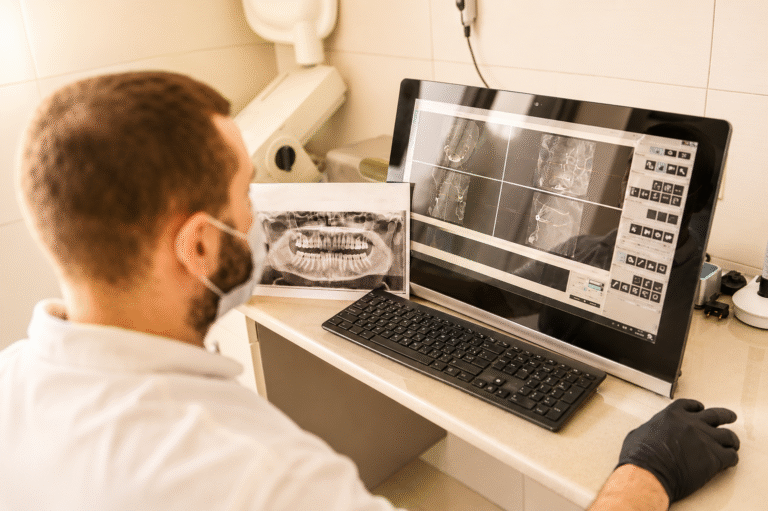
Dental X-rays are another routine service, though not every appointment needs them. Bitewing X-rays help detect decay between teeth and monitor bone levels. A panoramic image gives a wider view of the jaws, wisdom teeth, and some structural issues. Individual films or digital images may be taken when a specific tooth is causing trouble. The right dentist explains why imaging is needed rather than ordering it automatically.
Cavity treatment is common, but technique matters
Yes, fillings are still one of the most common treatments in general dentistry, and they should absolutely be within the scope of a general dentist. But the quality of that care depends on more than whether the cavity gets “fixed.”
A strong filling appointment starts with a careful diagnosis. Not every stain is decay. Not every small area on an X-ray needs immediate drilling. Some early lesions can be monitored or treated with fluoride and home care changes, especially when they have not broken through the enamel. On the other hand, waiting too long on active decay can turn a modest filling into a much larger restoration.
Most offices now use tooth-colored composite fillings for visible areas and many back teeth as well. They blend better cosmetically and bond to the tooth, but they also require meticulous moisture control and careful placement. If you have ever had a filling that felt rough, sensitive, or “too high” when you bit down, that usually reflects the details of the procedure, not just the material itself.
A general dentist should also evaluate why the cavity formed. Was it a flossing problem between tightly spaced molars? Frequent snacking? Dry mouth from medication? A failing old filling? Patients benefit when the conversation moves beyond the repair itself.
Gum care belongs at the center, not the margins
One of the most overlooked services a general dentist provides is periodontal care. Gum disease often advances quietly. People can have bleeding when brushing, chronic bad breath, tenderness, or gum recession for years without understanding that the supporting tissues around the teeth are under strain.
In many practices, the first signs show up in routine measurements around the teeth. Pocket depths, bleeding points, bone changes on X-rays, and visible tartar below the gumline tell the story. Early gingivitis may improve with better home care and professional cleaning. More advanced disease may require scaling and root planing, localized antibiotic therapy, closer maintenance, or referral to a periodontist.
This is not a minor side issue. Untreated periodontal disease can lead to loose teeth, shifting bite, discomfort, and tooth loss. It can also complicate restorative work. There is little value in placing a crown beautifully on a tooth that sits in an inflamed, unstable gum environment.
Experienced general dentists are often very direct about this. A patient may come in asking about whitening or a chipped front tooth, and the dentist may first address inflammation and buildup. That can feel frustrating in the moment, but it is the right clinical sequence. Cosmetic improvements do not last well on an unhealthy foundation.
Restorative work should cover more than simple fillings
When teeth are broken down beyond what a filling can reasonably handle, a general dentist commonly provides more extensive restorative treatment. Crowns are a standard example. They are used when a tooth has a large cavity, a fractured cusp, a failing large filling, or weakened structure after root canal treatment.
You should expect a general dentist to explain why a crown is needed instead of a filling. Sometimes the decision is straightforward. A back tooth with very little healthy tooth structure left will not hold up well under chewing pressure with another patchwork repair. Other times the choice is more balanced, and the dentist should discuss trade-offs. A conservative filling saves more natural tooth, but it may have a shorter lifespan if the remaining walls are thin.
Bridges may also be offered in some cases to replace missing teeth, though implants and removable options are part of that conversation too. Dentures, partial dentures, and relines or adjustments of existing appliances often fall under general dentistry as well. Many adults are surprised to learn that their everyday dental office can manage these needs.
A practical office will also talk honestly about longevity. Crowns are durable, but they are not permanent in the sense many patients imagine. Their lifespan depends on bite forces, grinding, home care, materials, and the condition of the underlying tooth. The best dentists set realistic expectations.
Root canals may be available, depending on complexity
Many general dentists perform root canal treatment, especially on front teeth and some premolars. Some also treat molars routinely. Others prefer to refer more often to an endodontist, particularly for curved roots, calcified canals, retreatment cases, or severe infection. That variation is normal and often reflects good judgment, not limited competence.
If a tooth has irreversible nerve inflammation or infection, you should expect a general dentist to diagnose it, explain the findings, and either treat it or arrange referral promptly. Symptoms can include lingering sensitivity to hot or cold, pain on biting, spontaneous throbbing, swelling, or a pimple-like bump on the gum. Yet not every root canal case hurts. Some are found on X-rays before the patient notices much at all.
What matters is that the office handles the case in a coordinated way. If the dentist performs the root canal, there should also be a plan for restoring the tooth afterward, often with a crown on a back tooth. If the case is referred out, the general dentist should still remain involved in the broader treatment plan.
Extractions and urgent care are part of everyday practice
A general dentist should also be able to evaluate dental emergencies and provide urgent treatment. That includes toothaches, cracked teeth, lost fillings, broken crowns, swelling, localized infection, trauma, and pain related to biting pressure. Not every office offers after-hours emergency access, but every established practice should have a process for urgent calls and same-day assessment when needed.
Extractions are another common service, especially for severely damaged, loose, or non-restorable teeth. Many general dentists remove straightforward teeth in-house. Surgical extractions, impacted teeth, or complicated wisdom teeth may be referred to an oral surgeon. Again, the referral itself is not a gap in care. It is often the safest route.
A realistic emergency visit may not solve everything on day one. Sometimes the goal is to diagnose the cause, control pain or infection, and stabilize the situation until definitive treatment can happen. Patients often expect a single appointment to provide total relief, but in dentistry, stages are common. A swollen tooth may need medication and drainage before a root canal or extraction. A broken front tooth after trauma may need temporary repair before the final restoration.
Cosmetic care often starts with general dentistry
Cosmetic dentistry is not a separate universe. In many cases, it begins in the general dentist’s chair. Whitening, bonding, reshaping small chips, replacing old visible fillings, and improving the appearance of worn or uneven teeth are all services many general dentists provide.
The best cosmetic conversations are grounded in function and health. If a patient wants whiter teeth but also has heavy grinding, a responsible dentist addresses both. If someone asks for veneers on crowded teeth, the dentist may explain that orthodontic movement could preserve more natural enamel. Cosmetic success is not just about the day the photos are taken. It is about how the work performs two, five, or ten years later.
This is one place where real-world judgment matters. Patients often bring in screenshots of dramatic smile makeovers, but the right treatment depends on bite, enamel thickness, gum symmetry, budget, and maintenance habits. A skilled general dentist knows when a simple polishing and whitening plan will get a patient 80 percent of the way to their goal, and when a more involved approach is justified.
Mouthguards, night guards, and bite concerns
General dentists frequently manage the practical side of jaw and bite issues. If you clench or grind your teeth, wake with jaw soreness, or are starting to chip edges and wear down enamel, a custom night guard may be recommended. This is one of those services patients tend to underestimate until they compare a custom appliance with an over-the-counter one.
A properly made guard is designed around your bite and comfort. It should fit securely, distribute forces sensibly, and be adjusted as needed. That last part matters. A poorly fitting guard can create new pressure points or simply end up in a bedside drawer after a week.
Dentists also assess bite problems that affect restorations. Repeated fractures in the same area, flattened chewing surfaces, gum recession from traumatic brushing combined with clenching, https://manueledmn344.theglensecret.com/general-dentist-tips-for-stronger-teeth-and-gums and tension in the chewing muscles are patterns a general dentist sees regularly. They may not “cure” every jaw problem in-office, but they should be able to identify the issue, start conservative management, and refer when symptoms point to more complex temporomandibular disorders.
Oral cancer screening and whole-mouth observation
One service people rarely ask for, but should expect, is an oral cancer screening as part of periodic exams. This does not always look dramatic. It can be a careful inspection of the tongue, floor of the mouth, cheeks, palate, lips, and throat-adjacent tissues, along with questions about soreness, ulcers, lumps, or patches that have not healed.
The point is not to alarm patients. Most unusual spots turn out to be benign irritation, friction, or common lesions. Still, a general dentist is often the clinician most likely to notice something early because they see the mouth repeatedly over the years. If an area looks suspicious or does not resolve, referral for further evaluation is appropriate and important.
This broader observational role extends beyond cancer screening. Dentists often notice signs of acid erosion, eating disorders, dry mouth, tobacco effects, sleep-related grinding, medication side effects, or neglected dental work that could soon become urgent. Good general dentistry is partly pattern recognition.
Pediatric and family care, depending on the practice
Many, though not all, general dentists treat children. Some offices are set up for full family care, from a child’s first exam through adult restorative treatment and older-age maintenance. Others limit treatment by age or refer very young or highly anxious children to a pediatric dentist.
If your office advertises family dentistry, you should expect age-appropriate prevention, sealants when indicated, fluoride guidance, monitoring of eruption patterns, and practical advice on habits like thumb sucking, mouth breathing, and sports protection. Not every child needs intensive intervention. Sometimes the most valuable service is helping parents understand what is normal and what needs watching.
Adults benefit from continuity here. A family-oriented general dentist often tracks changes over long spans of time and can spot inherited patterns such as crowding, weak enamel, or gum vulnerability.
What a well-rounded general dentist commonly provides
- routine exams, cleanings, and appropriate dental X-rays
- cavity treatment, replacement of old fillings, and monitoring of early decay
- crowns, basic bridges, dentures, and many forms of restorative maintenance
- gum disease evaluation and treatment, including ongoing periodontal maintenance
- emergency care, extractions, and diagnosis with referral when specialty care is the better option
That range covers the majority of everyday dental needs for most patients. The exact menu varies by training, technology, and the dentist’s comfort level, but those core services are standard.
Referral is part of good care, not a failure of care
Patients sometimes feel uneasy when their general dentist sends them to a specialist. In practice, referrals are a sign that the dentist understands limits, complexity, and what will serve the patient best.
A difficult root canal may go to an endodontist. Advanced gum surgery may go to a periodontist. Impacted wisdom teeth often belong with an oral surgeon. Significant orthodontic correction may be better handled by an orthodontist. Yet the general dentist remains central. They diagnose the initial issue, communicate with the specialist, and integrate the result into long-term maintenance.
This coordinated model is similar to how primary care works in medicine. Most needs are handled directly, and complex cases move to focused expertise when warranted.
What patients should notice in a good dental office
There is a difference between an office that offers many procedures and one that provides thoughtful care. If you are trying to understand what to expect from a general dentist, pay attention to how decisions are made. Are findings shown to you on images or explained clearly? Are treatment choices presented with pros and cons? Does the team remember your history and notice patterns over time? Are you being pushed toward a large elective treatment plan without a clear rationale?
Here are a few signs the care is on solid ground:
- the dentist explains not just what they recommend, but why
- preventive advice is tailored to your actual habits and risk factors
- referrals are made when the case is outside routine scope or likely to benefit from specialist care
- follow-up matters, especially after crowns, root canals, gum therapy, or urgent visits
- the office discusses maintenance, not only one-time procedures
That kind of practice tends to feel less transactional. It is focused on preserving teeth over decades, not simply filling the schedule with procedures.
The everyday value of a long-term dental relationship
The most useful service a general dentist provides may be continuity. Dentistry works best when someone knows your baseline. A dentist who has seen your mouth over several years can recognize that a tiny fracture line is new, that your bite has shifted subtly, or that your gum recession accelerated after a medication change. Those details are easy to miss in one-off emergency visits or sporadic care.
This continuity also improves decision-making. Not every tooth with a crack needs a crown today. Not every worn filling needs replacement this month. Sometimes careful monitoring is the right call. Other times a dentist who knows your history can say, with confidence, that a watch-and-wait approach has run its course.
That balance is where experience shows. The best general dentist is not the one who treats every issue aggressively, or the one who delays everything. It is the one who can separate what is urgent from what is stable, what can be maintained from what is failing, and what belongs in-house from what should be referred.
When patients ask what services they should expect from a general dentist, the answer is broader than many assume. You should expect prevention, diagnosis, routine treatment, repairs, gum care, urgent care, guidance, and coordination. You should also expect judgment. That is the part that turns a dental office from a place that fixes teeth into a place that helps you keep them.
Smyle Dental Newhall
Address: 23754 Newhall Ave, Santa Clarita, CA 91321
Phone number: +16612559200
FAQ About General dentist
What does it mean by general dentist?
A general dentist is your primary dental care provider. They focus on the overall prevention, diagnosis, and treatment of your daily oral health needs. Think of them as your primary care doctor, but for your teeth and gums.
What is the difference between a dentist and a general dentist?
A dentist is a broad professional title for any licensed oral healthcare provider, while a general dentist is a specific type of primary care dentist who focuses on routine, preventive, and everyday treatments.
What is the difference between a dentistry practitioner and a dentist?
A dentist is a licensed doctoral-level healthcare professional, whereas a dental practitioner is a broader umbrella term that can include dentists as well as other trained oral health professionals.